

Our Process
-

Consult
Finding the right solution begins with a thorough consultation and assessment. We take a cast or scan of the residual limb for a prosthesis, or the body part that needs support or correction for an orthosis.
-

Design
Using the cast or scan, we create a physical plaster of paris mould and/or generate a CAD mould which is then carefully re-worked to create a custom design for a prosthesis or orthotic.
-
Manufacture
The prosthesis or orthotic is produced for trial (e.g. a test socket) or permanent use using state-of-the-art equipment, components and lightweight, flexible, skin-friendly materials.
-

Fitting
Fit, comfort and function are vital. Typically more than one fitting is required to custom fit a prosthesis or orthosis, and it is standard practice for a patient to trial a prosthesis before the definitive prosthesis/orthosis is completed.
-

Ongoing Care
Prosthetic and orthotic devices need to be serviced to maintain effective function, and adjustments carried out to accommodate physical changes and optimise fit.
Custom Made AFO’s
AFOs in Brisbane and Toowoomba
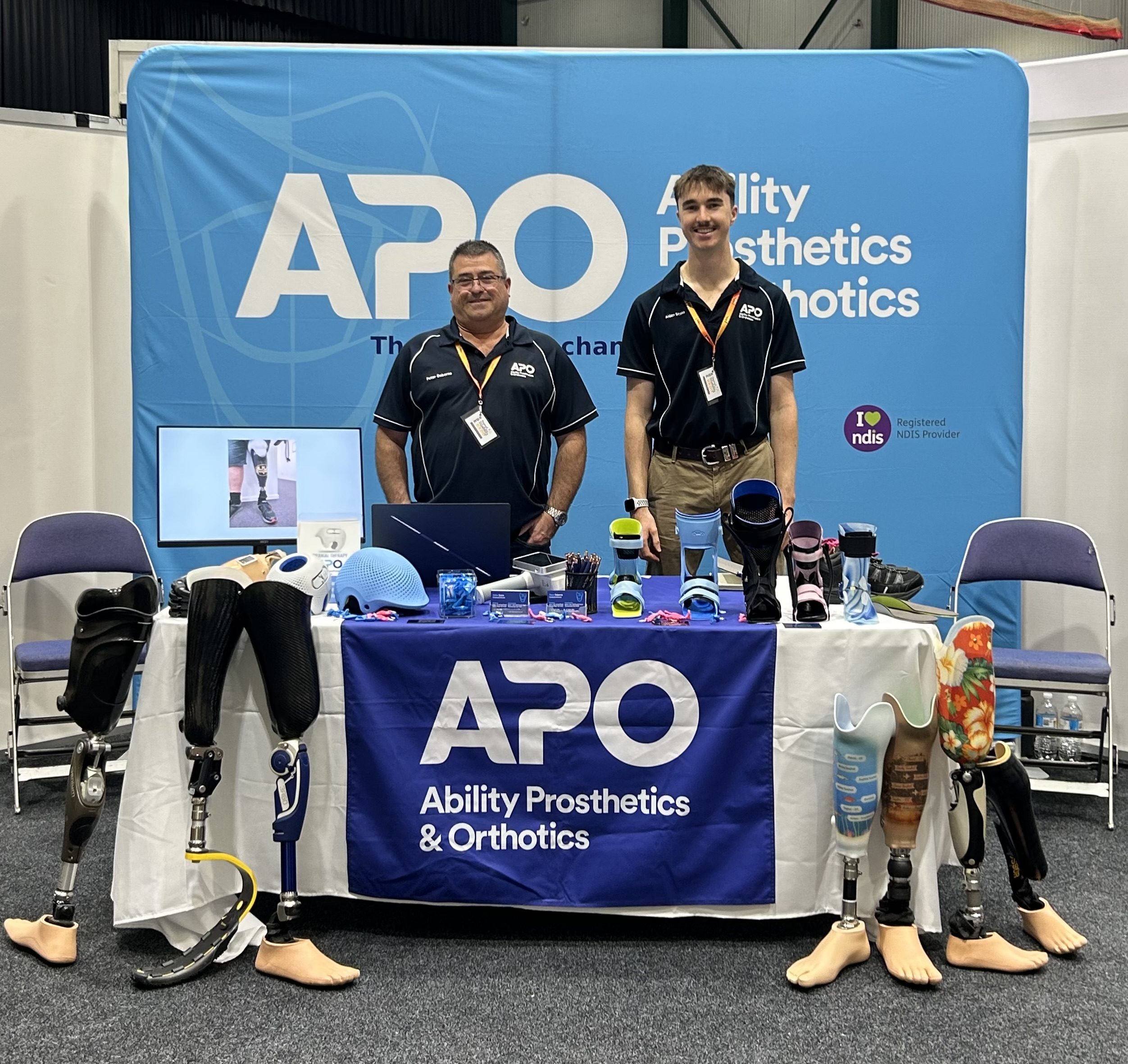
OUR ORTHOTISTS PETER AND AIDAN HAVE MORE THAN 30+ YEARS OF EXPERIENCE PROVIDING PERSONALISED ORTHOTIC CARE. WE COMBINE CLINICAL EXPERIENCE WITH CURRENT ORTHOTIC TECHNOLOGY TO DESIGN AND MANUFACTURE CUSTOM MADE ORTHOTICS AROUND EACH PERSON’S ANATOMY, MOBILITY, LIFESTYLE AND GOALS.
Every AFO is designed with your anatomy, movement, stability, lifestyle and functional goals in mind. Whether you need support for foot drop, improved ankle stability or assistance with walking, we work with you to develop an orthotic solution that supports your function, comfort and independence.
With clinics in Brisbane and Toowoomba, we provide personalised orthotic assessment, custom AFO design, fitting and ongoing care across Queensland.
 What is an Ankle-Foot Orthosis (AFO)?
An ankle-foot orthosis (AFO) is an external orthotic device that supports the foot and ankle. It is designed to influence ankle and foot positioning, movement and stability to help address specific clinical and functional needs.
AFOs can be made from different materials and designed with varying levels of flexibility, stiffness and movement control. Most AFO’s are made from both thermoplastics like polypropylene and carbon fibre. The most appropriate design depends on your condition, muscle strength, joint mobility, walking pattern and the activities you want to perform.
An AFO may be recommended to help:
- Improve foot and ankle positioning
- Support stability during standing and walking
- Manage foot drop and assist foot clearance during walking
- Control unwanted ankle movement
- Support lower-limb alignment
- Accommodate certain foot and ankle deformities
- Protect affected structures during rehabilitation
- Assist functional mobility and everyday activities
The benefits of an AFO vary depending on the individual and the condition being treated. Our Orthotists assess your needs to determine whether an AFO is appropriate and which design may best support your goals.
ASK THE EXPERIENCED TEAM
Who may benefit from an AFO?
Foot Drop
Foot drop makes it difficult to lift the front of the foot during walking, increasing the risk of catching the toes or tripping. It can result from muscle weakness or impaired nerve function and may lead to a high-stepping walking pattern.
An appropriately selected AFO may assist foot clearance, support foot positioning and promote a more controlled walking pattern. The design depends on muscle strength, ankle mobility and functional goals.
Stroke
Following a stroke, changes in muscle strength, tone, coordination and ankle control can affect walking. Some people experience foot drop, difficulty controlling ankle movement or changes in foot positioning, which can impact balance and mobility.
An AFO may help improve foot clearance, support ankle stability and assist functional walking. The design should consider muscle strength, tone, joint movement and rehabilitation goals.
Cerebral Palsy
Cerebral palsy can affect muscle tone, strength, coordination and movement control, contributing to toe walking, ankle instability or changes in foot and ankle alignment.
An AFO may help support positioning, influence ankle movement and improve stability during standing and walking. The design should reflect the individual’s development, muscle function, joint flexibility and functional goals.
Traumatic Brain Injury (TBI)
A traumatic brain injury may affect muscle control, coordination, balance and walking. Depending on the injury, individuals may experience foot drop, weakness, altered muscle tone or difficulty controlling foot and ankle movement.
An AFO may help improve foot clearance, support ankle positioning and assist functional mobility as part of a broader rehabilitation plan.
Charcot-Marie-Tooth Disease (CMT)
Charcot-Marie-Tooth (CMT) is an inherited neurological condition affecting the peripheral nerves. It can cause muscle weakness, reduced sensation, foot drop, high arches and ankle instability.
An AFO may help improve foot clearance, support ankle stability and assist walking. The design depends on muscle strength, foot shape, flexibility and gait pattern. Careful consideration of skin integrity, pressure distribution and footwear is particularly important for individuals with reduced sensation.
Neurological and Neuromuscular Conditions
Conditions affecting nerve function or muscle strength can contribute to foot drop, weakness and ankle instability. These difficulties may affect foot clearance, balance, coordination and walking efficiency.
An AFO may provide support and movement control based on the individual’s muscle function, joint mobility, stability requirements and functional goals.
Musculoskeletal Conditions and Ankle Instability
Injuries, joint conditions and structural or biomechanical difficulties can affect ankle stability, alignment and weight-bearing function. Some people experience recurrent ankle sprains, restricted movement or difficulty walking on uneven surfaces.
An AFO may provide additional stability, control unwanted movement or protect affected structures during rehabilitation, depending on the condition and individual requirements.
An AFO is not suitable for every condition or every person. An individual assessment helps determine whether an orthosis is appropriate and which design may best support their needs.
Custom-Made AFOs
Designed for your anatomy, movement and goals
A custom-made AFO is designed around your individual anatomy and clinical requirements rather than relying solely on a standard device size or shape.
Custom fabrication may allow our Orthotists to tailor important design features, including:
- Fit and shape: Designed to accommodate your anatomy and limb contours.
- Support and control: Selected to address your specific stability and movement requirements.
- Flexibility and stiffness: Matched to the level of control required for your function.
- Pressure distribution: Consideration of areas that require pressure relief or additional protection.
- Foot and ankle positioning: Designed to support appropriate alignment where achievable.
- Materials and weight: Selected according to clinical requirements, durability and practical use.
- Footwear compatibility: Consideration of the shoes you wear and the activities you need to perform.
Our approach combines clinical assessment with custom design and in-house manufacturing to develop AFOs that are practical, functional and suited to the person wearing them.
A custom-made AFO is not always necessary. In some cases, an off-the-shelf device may adequately meet your needs. Our Orthotists will discuss the available options and recommend an approach based on your clinical requirements and goals. The most expensive or technologically advanced AFO isn’t necessarily the right one. We recommend the option that best suits your clinical needs and goals.
Types of AFOs
Articulated AFOs (AAFO’s)
Articulated AFOs incorporate a tamarack or free motion ankle joint that allows selected ankle movement while providing support and control. Depending on the joint design and configuration, the AFO may allow some ankle movement namely plantarflexion (the downward movement of the foot that points your toes away from your body) and dorsiflexion (the upwards movement of the foot that points your toes towards from your body) or can block these movements depending on the individual presentation and biomechanical goals.
By allowing controlled movement at the ankle, an articulated AFO may be appropriate for individuals who require foot and ankle support but can benefit from retaining some ankle mobility during standing and walking.
Rigid or Solid AFOs (SAFO’s)
A solid AFO is designed to provide substantial control of ankle and foot movement. Unlike an articulated AFO, it does not incorporate a ankle joint, allowing the orthosis to restrict ankle movement more consistently.
Solid AFOs are often considered when an individual requires greater support for ankle positioning, stability or control during standing and walking. The design can be customised to address individual alignment, muscle function and functional requirements.
Dynamic AFOs
Typically, an off the shelf device that is made from strong yet flexible materials like carbon fibre. Dynamic and functional AFOs are designed to assist movement while providing the level of support required for an individual’s specific needs. Rather than relying solely on rigid control, some designs use the properties of the materials, their shape and carefully selected stiffness to influence how the foot and ankle move during walking.
These AFOs may be particularly relevant when the aim is to assist functional movement, improve foot clearance or support aspects of walking while retaining some flexibility.
Other Specialised AFO Designs – GRAFO’s, SMO’s, PLS
Ground Reaction Force Ankle Foot Orthoses, Supramalleolar Orthosis and Posterior Leaf Spring AFO’s are other types of AFO’s that may be appropriate for you. Some people require more specialised designs to accommodate individual anatomy, deformity, pressure concerns or complex functional requirements.
These categories are not interchangeable, and no single AFO design is best for everyone. Our Orthotists will explain the options relevant to your needs and help determine which design is appropriate.
Understanding what you need your AFO to achieve
Choosing an AFO starts with understanding how your foot and ankle function and how this affects your everyday life.
During your assessment, our Orthotists may consider:
Your condition and goals
We discuss your medical history, current difficulties and what you would like to achieve, whether that involves improving walking, managing foot drop, increasing stability or supporting rehabilitation.
Strength and movement
We assess relevant muscle strength, joint range of motion, muscle tone where appropriate, and the ability to control the foot and ankle.
Walking pattern and balance
Where relevant, we observe your gait, foot clearance, ankle positioning, stability and functional movement to understand how an AFO may assist.
Alignment and anatomy
Your individual anatomy, joint alignment and any deformity help guide the shape and mechanical design of your AFO.
Skin health and pressure areas
We consider skin integrity, sensation and areas vulnerable to pressure when determining the design, fit and monitoring requirements.
Footwear and lifestyle
Your everyday footwear, work requirements, activity levels and personal preferences are important considerations when developing a practical orthotic solution.
Following your assessment, we discuss the recommended approach and explain the expected purpose, practical considerations and limitations of the proposed AFO.
AFO Fitting, Rehabilitation and Follow-Up
Receiving your AFO is only one part of the process. Appropriate fitting, education and follow-up help ensure the device continues to meet your needs.
Depending on your circumstances, your care may include:
- Individualised AFO fitting and adjustments
- Advice on appropriate footwear
- Guidance on introducing and wearing your AFO
- Education about skin checks and pressure areas
- Advice on using the AFO during everyday activities
- Review of comfort, fit and functional performance
- Adjustments as your needs change
- Coordination with your treating health professionals where appropriate
Some people need time to adapt to wearing an AFO. Your Orthotist will provide guidance appropriate to your device and circumstances.
Contact your Orthotist if you experience persistent discomfort, skin damage, changes in fit or difficulty using your AFO. If you notice concerning skin changes, remove the device and seek advice before continuing to wear it.
Prosthetics Funding
In a nutshell, the following categories apply to prosthetic funding:
- If you lost your limb due to disease or illness, you will most likely be covered by the Queensland Government’s Artificial Limb Service (QALS) or the NDIS if you are under the age of 65.
- If you lost your limb in an accident at home or during recreation, and there is no compensating body, then the public health system or the National Injury Insurance Scheme (NIIS) will cover the cost of the prosthetic limb/s. Note: The NIIS is still in development and in the meantime, funding will be provided by the NDIS.
- If your amputation was due to trauma, such as a motor vehicle or workplace accident, and compensation is identified as a possibility, the insuring organisation, e.g. National Injury Insurance Scheme (NIISQ) or WorkCover, will most likely fund your prosthesis and medical care as part of your rehabilitation.
- Veterans who either lost their limb as a result of injuries received while serving in the Australian Army, Navy or Airforce, or who have a Gold Card, will have their prosthesis paid for by the Department of Veterans Affairs (DVA) or the Defence Force.
- Most Private Health Insurance companies do not allocate funding for prosthetics, however it is worth checking with your insurer if you are uncertain, as they may cover partial costs.
Talk to your Prosthetist for more information.
Orthotics Funding
In Queensland the following options are available for orthotics funding:
- Queensland Health’s Medical Aid Subsidy Scheme (MASS) – this is a subsidy scheme for orthotics and therefore the patient is required to pay any shortfall.
- Department of Veterans’ Affairs (DVA) – DVA pay for orthotics for eligible serving and former Australian Defence Force members. An out-of-pocket contribution may be applicable, depending on the type of device required.
- Private Health – Most private health insurance companies do not allocate funding for orthotics, however it is worth checking with your insurer if you are uncertain, as they may cover partial costs.
- NDIS – If you are under 65, have a permanent disability and require support for the rest of your life, the NDIS may cover the cost of orthotics.
- National Injury Insurance Scheme (NIISQ) or WorkCover – If your injury was due to trauma, such as a motor vehicle accident or workplace accident, and compensation is identified as a possibility, the insuring organisation (NIISQ or WorkCover) will most likely fund your orthoses and medical care as part of your rehabilitation.
Talk to your Orthotist for more information.
The Australian Government's National Disability Insurance Scheme (NDIS) provides support to people with disability, their families and carers. Under the NDIS, all Australians under the age of 65 who have a disability that is likely to be permanent and significant are provided with the reasonable and necessary supports they need to live an ordinary life. This includes prosthetics and, in some cases, orthotics.
These are the steps involved in becoming an NDIS participant and getting funding approved for a prosthesis:
- 1
Contact NDIS
and request a NDIS registration form. Once you have received the form, complete it and return it to the NDIS.
- 2
Arrange your planning meeting
Once your registration form has been submitted, the NDIS will contact you to arrange a planning meeting with your Local Area Coordinator (LAC).
- 3
Meet with your prosthetist
IMPORTANT: Before your meeting with the NDIS' Local Area Coordinator, make sure you meet with your prosthetist. Your prosthetist will advise you of the funding required. The goals you set for yourself in your NDIS plan will determine the type of prosthesis NDIS may fund.
- 4
Meet with your Local Area Coordinator
You then meet with your NDIS Local Area Coordinator and develop a proposed plan requesting the funding and correct allocation required for the life of your plan (usually 12-months).
- 5
Visit your prosthetist for a functional assessment
Once you received a copy of your plan from NDIS, visit your Prosthetist for a functional assessment and quote that he will submit for approval to NDIS. At this point, there will be funding available for consumables like liners/socks to see you through until the approval comes through.
- 6
NDIS approval
Once NDIS approval is received, you can commence the process of having a prosthesis designed, manufactured and fitted.
Important Links
Here are some links to associations, organisations which support people requiring prosthetics and orthotics.
- Paralympics Australia
- Ottobock (Supplier)
Funding Bodies
- Medical Aids Subsidy Scheme (Queensland Health)
- Queensland Artificial Limb Service (Queensland Health)
- NDIS
- Department of Veterans Affairs
Ability Prosthetics and Orthotics is a registered member of the Australian Orthotic Prosthetic Association (AOPA), NDIS, Queensland Artificial Limb Service (QALS) and Department of Veterans Affairs.